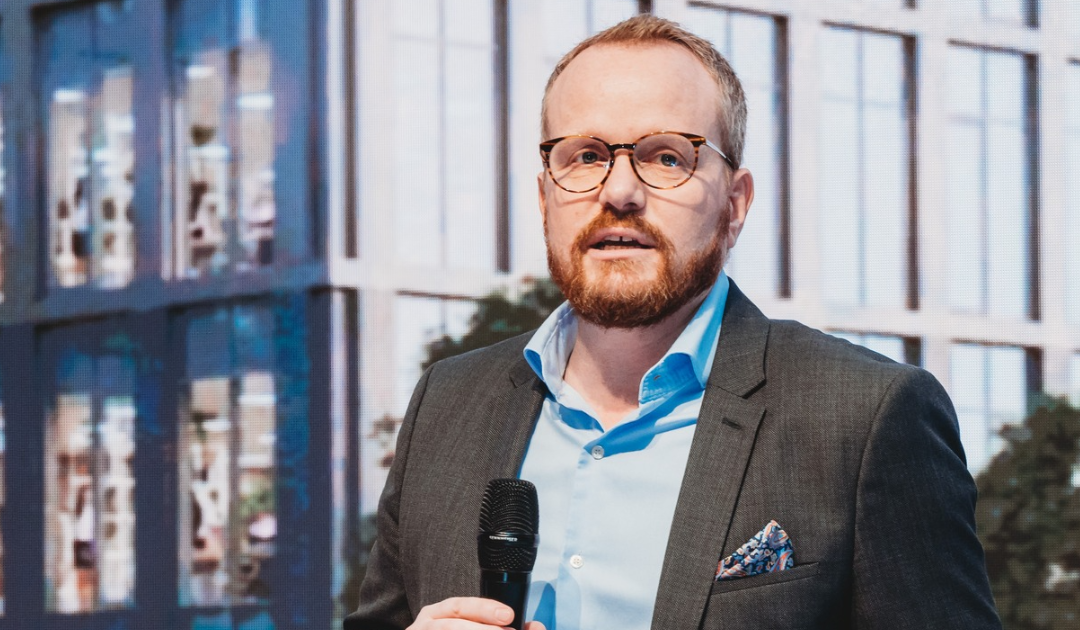
With nearly three decades of experience in construction and real estate across Western Europe and Central and Eastern Europe, Stephen Burke, Group Development Director at Forte Partners, has witnessed firsthand the transformation of Romania’s property market.
In this interview, he discusses the maturity of the local industry, the strategic thinking behind mixed-use developments, and what it takes to build resilient, high-quality projects in an increasingly complex and volatile environment.
You have worked across Western Europe and CEE for more than two decades. From a construction and delivery perspective, how would you describe Romania today compared to when you first started working here?
I consider the current quality of the institutional construction products delivered here in Romania, especially in Bucharest, on a par on what it is being delivered in CEE and Western Europe, and this is real evidence of the progress Romania has made over the last 20 years. It was my experience from the early years working in Romania that the local professionals were open to learn and absorb the experience from Western European influences on the design and construction process.
This has now led to an established set of real estate professionals here in Romania that can transport their knowledge and critical thinking anywhere in the world without concern and are actively leading the CEE in terms of the advancement of Real Estate expertise.
At Forte Partners, we’ve seen this evolution first-hand across our pipeline and across the delivery of complex, multi-phase projects, where quality execution depends on strong local capability, disciplined project controls and reliable partner networks.
You started your career as a Quantity Surveyor and have managed over €1 billion in construction value. How critical is cost modeling today compared to 10 or 15 years ago?
I believe cost modeling is as critical now as it has ever been. The backbone of any good real estate project is to have solid cost forecasting, control and monitoring that can allow the owner to make informed decisions that are directly relatable/proportional to the target quality objectives. This cost modeling must also deal with tricky inflationary forecasting and evaluation of the market at that time in terms of construction labor availability and other local and international factors that influence construction costs.
The encouraging part is that the industry has access to better cost budgeting tools than it did a decade ago regarding data, benchmarking, digital workflows and this will only accelerate as construction digitalization becomes more mainstream.
Forte Partners has built and exited projects that became market benchmarks. From your perspective, what differentiates Forte’s approach to construction and execution?
I believe it’s several considerations that we have managed to cultivate within the Forte team that has led to the success that we have thankfully encountered. Ranging from having a clear decision-making process, taking care and real interest in our design decisions, treating our partners and suppliers with respect, being proactive in resolving issues without being overly bureaucratic, listening to the market needs and remaining flexible enough to adapt and adjust to meet them.
That’s why we pay close attention to integration with the city, community impact and constructive engagement with authorities and neighbors. In practice, that is vital to achieving real estate success over the long term.
This philosophy is also visible in our strategy, as we’ve consistently developed offices in residential areas and residential in office-driven locations, to shorten commutes and create more balanced urban life, an approach we’re now expanding into full mixed-use destinations such as U•Center 3, the final phase of our landmark project in Tineretului area in Bucharest.
Forte Partners has developed a portfolio valued at 600+ million euro across office and residential, with projects such as Aviației Park, Londra 27, The Bridge, Sector 0 (Tandem & Millo Offices), Ștefan cel Mare Building, and U•Center, many of which have become reference points for architecture and execution in Bucharest.
What are the key criteria Forte Partners considers when evaluating new land acquisitions?
Our land evaluations start with the fundamentals, we consider location, urban planning parameters, utilities and the product mix that best fits the site. Beyond that, given our focus on large-scale inner-city office and residential projects with a strong retail component, we assess how the site connects to the public infrastructure network, responds to neighborhood needs, aligns with urban regulations, and whether it offers long-term flexibility or potential for expansion.
Focusing on Bucharest in recent years, we have seen how the commute from home to the workplace is a major factor in acquiring a skilled labor force and this has driven us to lead the way in developing hubs in the center-west and center-south of the city.
Access to public transport, especially the metro, is increasingly decisive. We have always acquired land plots for developing office projects close to metro stations, and the latest data confirms our strategy, as in H1 2025, 72% of lease agreements were signed in office buildings located within 500 meters of a metro station, and 90% of renewals took place in such buildings. This reinforces why connectivity and walkability are not “nice-to-haves,” but core underwriting criteria.
A land acquisition should not only work “on day one,” but still make sense in 10, 20, even 50 years, based on how Bucharest evolves around mobility, public space, and mixed-use intensity.
What are the biggest cost-related risks developers face in 2026, and how can they realistically be mitigated?
In Romania, labor cost and availability remain key pressure points in 2026. On top of that, material and equipment costs are heavily influenced by global geopolitical uncertainty and supply chain disruption. Against this background, it will be as important as ever to carefully cost budget a project in its design phase. Inflationary increases in construction costs haven’t been seen proportionally in line with expected revenues and finding the balance here to ensure we deliver products that are affordable to our target audience will be one of our core tasks over the coming years.
There are no magic answers as to their mitigation, but we see the importance of moving quickly, working with trusted partners that are willing to block resources for us, understanding the supply chain and better utilization thereon. We also believe in being brave, but not reckless, meaning we advance projects that have strong fundamentals and bring long-term value to the area, rather than relying on short-term market speculation.
From a construction standpoint, how would you characterize 2025? A year of consolidation, strategic recalibration, or groundwork for the next growth cycle?
I’d say 2025 fits all three. We focused heavily on asset management of recently delivered projects, completing fit-outs, stabilizing tenancy and optimizing operational processes, while also preparing the next wave of construction. A key milestone is U•Center 3, the final phase of our urban regeneration project in the Tineretului area of Bucharest.
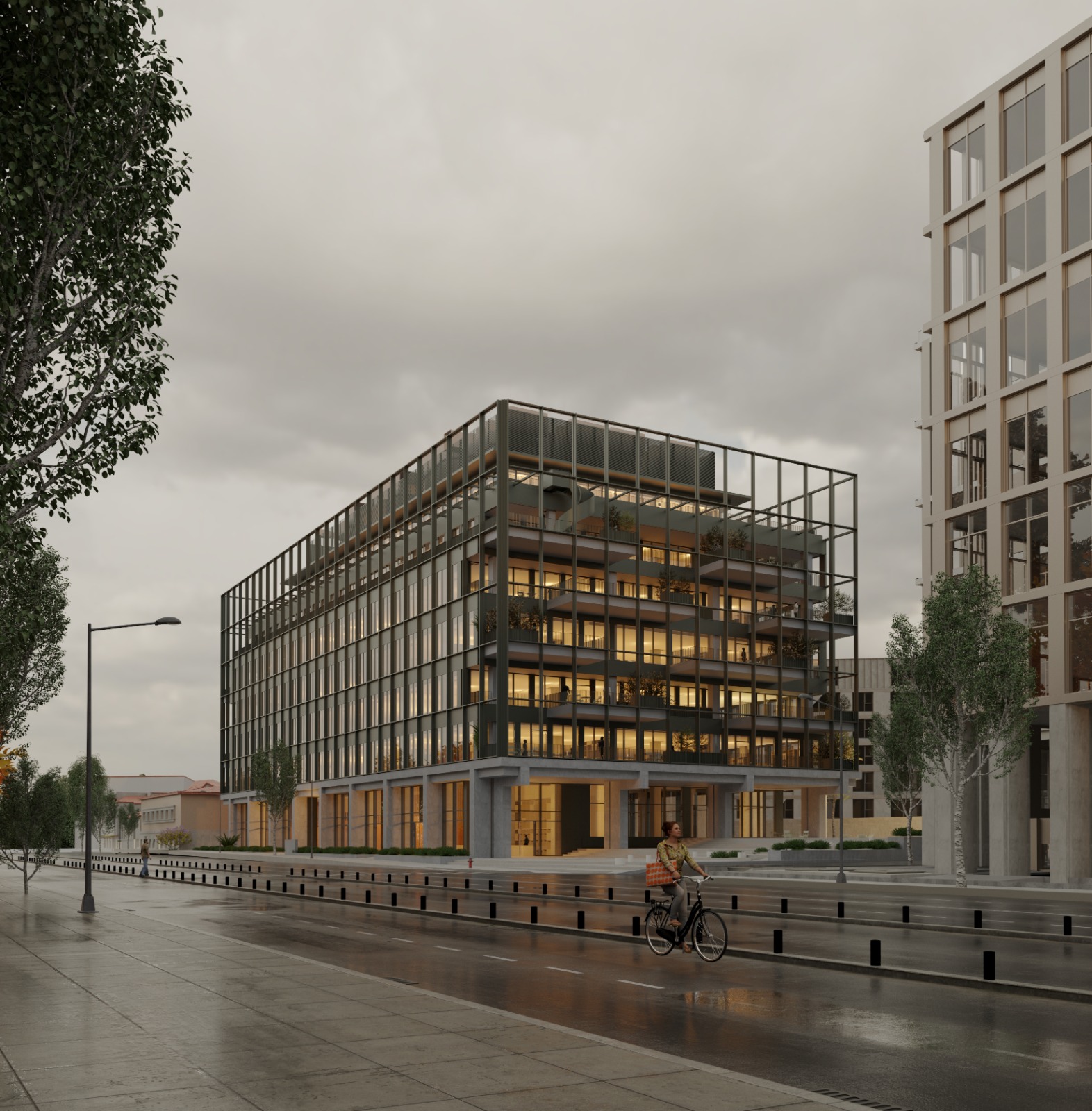
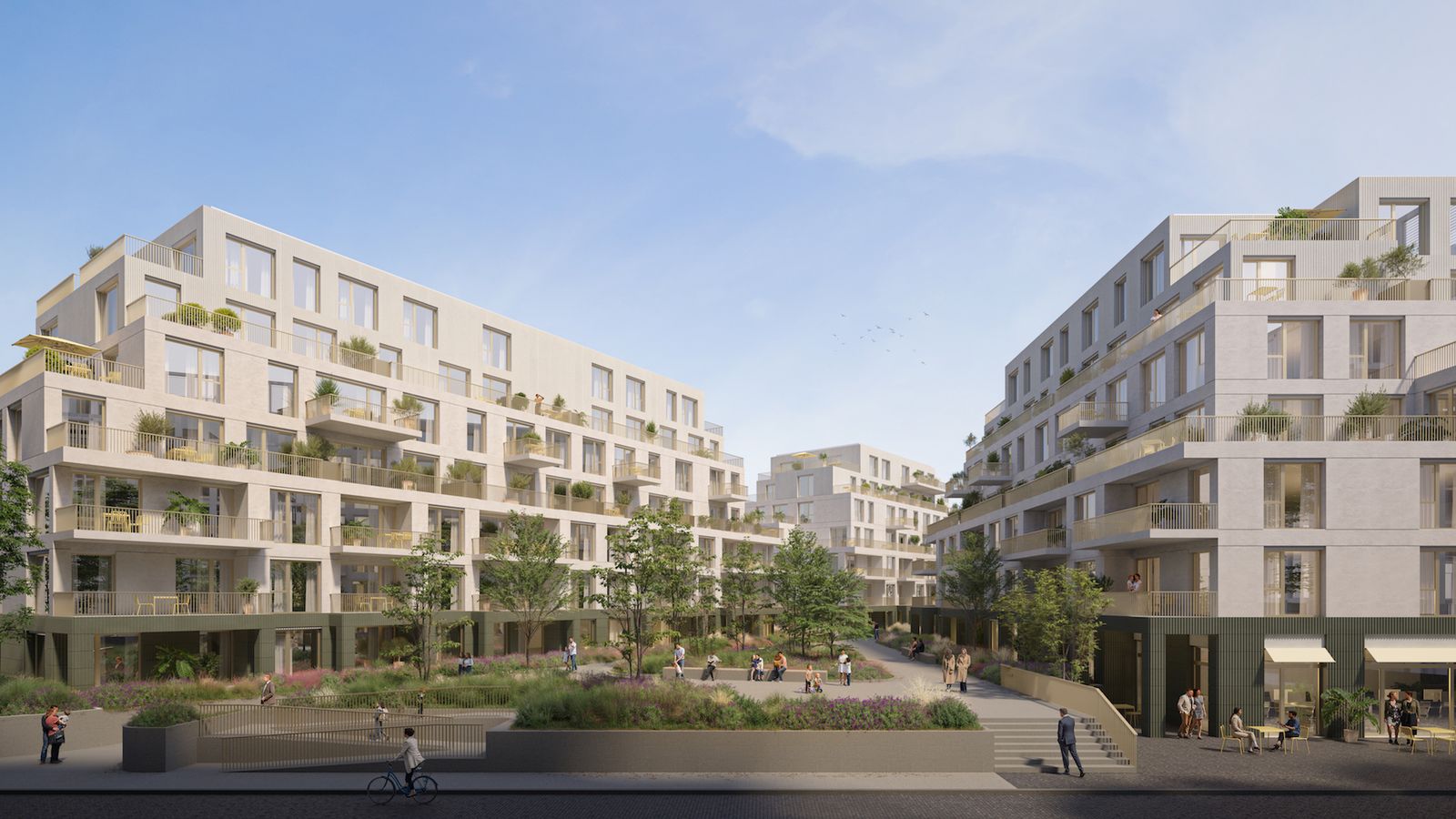
Construction on the office component started in July 2025, and the residential component is scheduled to commence soon in 2026. U•Center 3, a 100-million-euro investment, is designed as a mixed-use project comprising 14,500 sqm office, 1,700 sqm retail and 200 apartments, all organized around an open public plaza that keeps the area active beyond working hours.
From a building-performance standpoint, the office is designed as full-electric / NZEB compliant, utilization of heat pumps, LEED platinum, serviced with electricity from 100% renewable sources, refrigerants used with a GWP ≥700 and ODP >0, with smart BMS, daylight-adaptive lighting and rainwater reuse solutions, all reflecting our focus on long-term efficiency, comfort and sustainability
In parallel, we have added members to the team, been proactive in discussing with our existing tenants and residential buyers to better understand their needs for products to be delivered from 2026 onwards.
Did 2025 change the way Forte Partners assesses risk when launching or phasing new developments?
Generally speaking, I don’t think 2025 fundamentally changed our approach to risk, but it certainly reinforced which risks require more active management. It is true that this post pandemic market, recent local political upheavals, increased fiscal restrictions, stricter urban regulations, rising inflation and high interest rates have identified a particular set of problems to address, but the approach to our developments remains the same.
The fundamentals of the planned project need to always work, we need to adjust our volume of production to match what the market can reasonably absorb We still look to lead, not just follow, by anticipating trends and creating value through regeneration, quality and a better urban mix.
What also matters for risk is regulatory clarity. For Bucharest, stable urban planning frameworks and more digitalized permitting processes are essential for large, long-cycle investments.
U•Center has become a reference point for modern office developments. What were the key construction challenges behind such a complex project?
A major challenge was phasing, balancing offices, residential and retailand to consider the ongoing construction logistics to deliver the above. The size of the land certainly helped with this, and we also used the natural slope to our advantage to createground-floor retail spaces that add value to the entire project and activate the public spaces.
Working with an experienced architectural and engineering design team created a solid base for the construction to come and including additional investments for greater flexibility was a wise choice.
The pandemic period (2020–2023) overlapped directly with the construction and delivery of U•Center phases 1 and 2, bringing supply-chain and operational challenges. What helped us maintain progress was long-standing collaboration with contractors and suppliers, constant communication and a disciplined decision-making process, so construction could continue without uncertainty.
The market validation is clear, as both U•Center 1, acquired by Pavăl Holding in 2022 and U•Center 2 are fully leased, with a combined GLA of 66,000 sqm. In U•Center 1, office spaces are occupied by companies such as Booking Holdings, Endava, Lensa, Up România, BT and Neuroaxis.
In U•Center 2, the tenant mix includes a strong share of IT&C companies, such as Glovo, Brinel, Eurowag and Cognyte, alongside major players from the energy and cosmetics industries. The retail component is also fully leased, anchored by an Auchan 2,600 sqm supermarket, complemented by food & beverage operators such as Manufaktura the Coffee Shop.
Which projects currently represent the main construction focus for Forte Partners, and what makes them strategically important for the company at this stage?
We are actively seeking destinations for mixed-use projects, where offices, residential and commercial services reinforce each other and create real community value for both occupants and the surrounding neighborhood. Bucharest still has strong potential for these projects, especially where public transport, amenities and urban needs align.
This has included adding more construction management personnel to our team for the objective of constructing directly ourselves and we see clear added value in this regard in our upcoming residential developments. This has helped us with a better understanding and control of all the construction elements that go into such developments and allowing us to be even more sure of the quality of product we are delivering.
We also believe that such mixed-use developments help us to mitigate current risks for oversupply in one particular sector, creating destinations in themselves that help each other for a mutually beneficial ecosystem but retains the flexibility that is required to navigate the needs over the coming years.
U•Center 3 is the most direct expression of this strategy, as it comprises offices, homes and retail around a shared open plaza designed to shorten the distance between living, working and daily services, and to keep the area active after 6 PM.
From your perspective, how are office buildings evolving in response to changing work patterns?
The key shift is that the office must earn the commute. Comfort, experience and performance matter more than density.
We have seen that office design has evolved to better understand the needs of the user, our tenants often consulting and organizing questionnaires for their employees to identify ways to improve. This has involved more quiet rooms, designated work areas, improved commercial facilities, investment in kitchens and high-quality food, coffee points, relaxing zones, better utilization of outdoor space, warmer and greener finishings and a move away from heavy populated open plan layouts.
Quality is now more important than quantity and flexibility in fit-out and building systems is crucial as companies continue to refine how they work. At the same time, sustainability and efficiency are no longer “nice-to-have.” At Forte Partners, we see this clearly in our own portfolio, as the first two phases of U•Center are certified to leading international sustainability and wellbeing standards (including LEED and WELL at Platinum level, alongside health-safety-focused certification frameworks), a signal that top-tier performance is increasingly expected by institutional tenants.
Full-electric systems, smart building management and high-performing envelopes translate into lower emissions, more predictable operational costs and better comfort. U•Center 3’s office component is designed as full-electric / NZEB compliant with smart BMS and water reuse solutions, reflecting how “next-generation office” is becoming the new baseline.
In the residential sector, what construction-related features are becoming non-negotiable for end users and investors alike?
The non-negotiables are the elements that protect everyday comfort and long-term value.
I think it is crucial to not lose focus on the core design and construction elements that are vital in successful residential developments. When considering this in construction terms, we are heavily focused on proper sound insulation, functional outdoor spaces, efficient and easy to maintain heating and cooling installations, flexible installations to allow a full range of smart controls as the apartment user is comfortable with, high quality thermal insulation including triple glazed windows and ventilated facades, good natural light and generally sourcing good quality and long lasting materials and equipment.
We are also determined to ensure that what we have promised to our buyers is what we deliver and this communication is vital in establishing long term trust.
After nearly three decades in construction and real estate, what still surprises you about this industry?
I think the level of constant evolution of this industry keeps it interesting on a day-to-day basis. I don’t think there has ever been a time when you can consider that you know all that you need to know to keep developing. Being up to speed with the needs of newer generations, market fluctuations, new technologies, takes constant effort and an openness for continued learning. Most exciting will be the upcoming digitalization of the construction industry.
This is long overdue and we are seeing now the real signs of what is to come and the benefits it will bring. It will be interesting to see in 2026/2027 the implementation of the various recently developed construction specific software and how this will change how we design, construct, track and operate real estate projects.
Are there specific asset classes or project typologies that Forte Partners is prioritizing for future investments?
We are currently prioritizing mixed-use developments. Our work since 2014, when Forte Partners was founded, transformed us into one of the leading office developers in Romania and we will continue to deliver Class A offices in the years to come, focusing now even more on quality rather than quantity, but in parallel we see a need for good quality residential and we know the best outcomes come when housing is combined with the services that make daily life easier, such as retail, leisure, public space and strong public transport connectivity
U•Center 3 is a strong example of this direction and a strategic evolution of our long-term approach, which is creating communities by bringing living, working and services closer together.
The interview is also available in Romanian HERE. Interviul este disponibil și în limba română AICI.
Follow FORTE PARTNERS on:
Website | Facebook | Instagram | LinkedIn